
Spider Solitaire Classic Games
Guru Puzzle GameCard
4.92.13K Reviews
- Version
- 5.6.0-26102377
- Installs
- 5.00M
- Age Rating
- Everyone
Screenshots
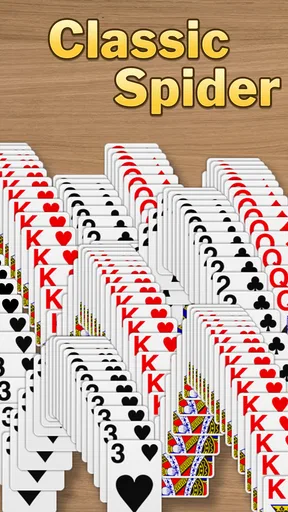
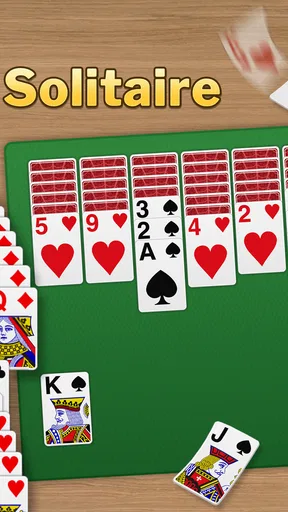
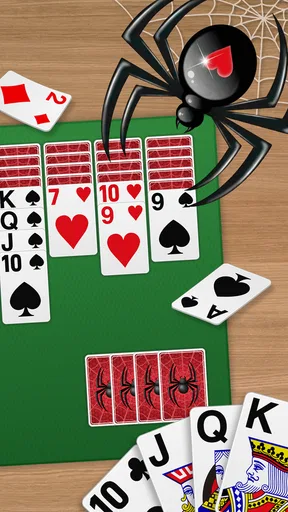
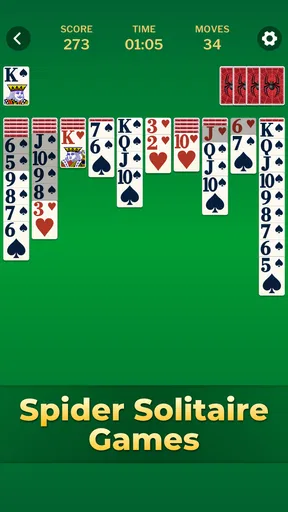
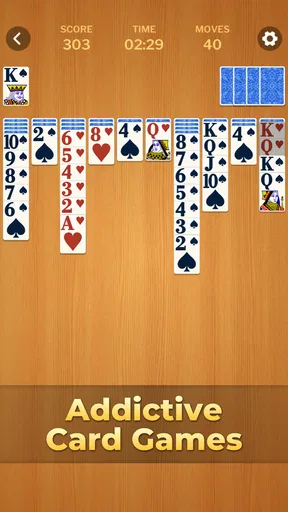
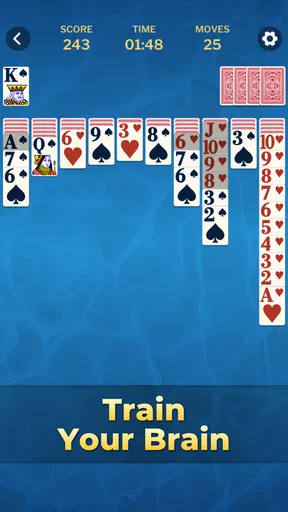
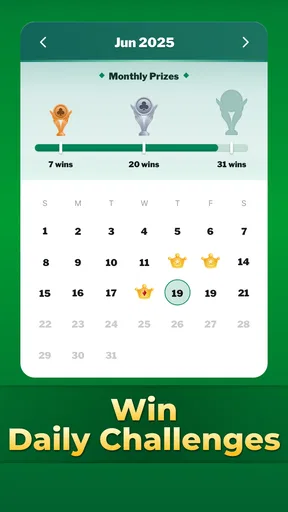
Our Review of Spider Solitaire Classic Games
 Analysis by Appyee
Spider Solitaire Classic Games is the sort of card game I open when I want something familiar, quiet, and easy to start without committing to a long play session. The first move is immediate: I look at the columns, choose a card that can be shifted, and begin trying to uncover what is hidden underneath. That simple action creates a small puzzle rather than a demanding strategy exercise, and it explains why this game can fit so naturally into a coffee break, a commute, or the few minutes before bed.
Developed by Guru Puzzle Game, this free card game focuses on Spider Solitaire rather than trying to become a large collection of unrelated activities. I found that narrow focus useful. There is no learning curve to fight through, and the basic rules are recognizable even if I have not played solitaire for a while. Its Everyone age rating also makes it an approachable choice for households looking for a straightforward game that does not depend on fast reactions or complicated controls.
The game has attracted a 4.9 average from around 123 thousand ratings and has passed 5 million installs, which matches my impression that it is designed for broad, casual use. Those figures are not a reason by themselves to install anything, but they do suggest that the central experience is easy for many people to understand. After spending time with it, I would describe it as a relaxed puzzle loop with just enough uncertainty to make one more attempt feel worthwhile.
How the first move turns a quiet moment into a puzzle
Spider Solitaire works because the first action is small but meaningful. I am not asked to memorize a long tutorial or react to a timer before I understand the board. I simply examine the visible cards and decide which move might open space, reveal a useful card, or improve the order of a column. That makes the opening feel personal: even a modest decision can change what becomes available next.
The interface is best understood through the cards themselves. I read the columns, identify possible sequences, and move cards to expose information. The game does not need elaborate presentation to create tension. The hidden cards are enough. Every covered card represents a possibility, while every empty space suggests a chance to reorganize the layout. I enjoy that the puzzle asks me to plan ahead without making the planning feel like homework.
For a new player, the most helpful habit is to avoid moving a card merely because the move is legal. I try to ask what the move accomplishes afterward. Does it uncover a face-down card? Does it preserve a useful sequence? Does it create room for a longer arrangement? This approach makes the game more satisfying than tapping through obvious options, and it is one of the first practical lessons I would give to someone trying the app for the first time.
The most important resource is often not a particular card but flexibility. An open column can give me room to rearrange cards, while a badly timed move can leave several columns blocked. I therefore prefer moves that reveal information or create future choices, even when they do not immediately complete a sequence. That is a subtle difference between playing actively and simply moving cards around until the board becomes difficult.
The strongest early-game tip is to value future space over immediate neatness. A tidy-looking column is not always useful if it prevents access to the cards below it. When I keep one possible rearrangement available, I have a better chance of recovering from an awkward draw or an imperfect decision. The game rewards patience, but it does not require a spreadsheet or a rigid formula.
The feedback rhythm is clearer than the rules may seem
Each move gives a quick form of feedback. A card shifts, a hidden card becomes visible, or a sequence grows. I can immediately see whether my decision opened the board or narrowed it. That rhythm keeps the experience active even though the game itself is calm. I am constantly comparing the board before and after a move, looking for the next useful change.
This feedback is also what makes mistakes understandable. If I place a card in a way that blocks an important column, the problem usually becomes visible within a few turns. I do not need to wonder whether I failed because of a hidden rule. The layout shows me that I used space poorly or spent a valuable option too early. For casual players, that clarity matters because it turns failure into something I can learn from rather than a random punishment.
I like the way a good sequence builds momentum. One successful move can expose a card, which enables another move, which opens a column, which makes a larger rearrangement possible. The reward is not only the final completion. It is the chain of small improvements along the way. When several decisions connect, the board seems to cooperate with me, and that is usually the moment when I decide to keep playing.
There is a trade-off, though. The same simplicity that makes the feedback readable can make the experience feel repetitive for players who want a deeper card system. If you are looking for competitive rankings, elaborate character progression, or a constantly changing set of rules, this is probably too focused. Its pleasure comes from refining decisions inside a familiar structure, not from discovering a large amount of new content.
I also found that the game suits different attention levels. I can play carefully when I want a small logic challenge, or make slower, more instinctive choices when I am tired. It does not demand the same concentration as a strategy game with multiple resources and opponents. That makes it useful for short breaks, although players who enjoy pressure may find the relaxed pace less exciting than a timed solitaire alternative.
Why completing a sequence feels like a real reward
The clearest reward is the moment a full sequence comes together. It confirms that several earlier choices worked, including choices that may have seemed unimportant when I made them. I get a sense of closure from reducing the clutter on the board and seeing the puzzle move toward completion. The satisfaction is modest, but it is genuine, especially when the layout initially looked difficult.
What I appreciate most is that the reward is connected to decisions rather than random decoration. I am not simply waiting for a flashy result. I earn progress by preserving options, uncovering cards, and recognizing when a sequence can safely be moved. That connection gives the game a gentle mental payoff. It feels closer to solving a small problem than consuming a passive animation.
There is also value in partial progress. Even when I do not finish a board, I can often identify the point where my plan became too narrow. Perhaps I filled a space before using it to reorganize another column, or moved a sequence that would have been more useful elsewhere. Those moments make a failed session informative. The next attempt begins with a clearer idea of what I want to avoid.
For someone who plays solitaire mainly to relax, this reward structure is a strong fit. I can stop after a completed sequence or after a satisfying improvement without feeling that I have abandoned a larger campaign. For someone who needs constant novelty, the reward may not be enough. The game asks the player to appreciate small gains, and that is a personal preference rather than a universal strength.
One practical way to improve results is to delay committing a long sequence until I know whether it is helping access the board. A long run of cards looks efficient, but it can also hide the flexibility I need for the next stage. I try to treat a sequence as a tool, not automatically as a finished achievement. That mindset produces more thoughtful play and makes the later part of a session less dependent on luck.
The reset is part of the appeal, not just an ending
When a session ends, the game’s greatest advantage is that beginning again feels effortless. I do not need to prepare, remember a story, or rebuild a complicated strategy. I can reset my expectations and look at a new arrangement with fresh attention. That clean restart is the reason I often play one more round after finishing or getting stuck.
The reset also softens failure. In a larger game, losing might mean repeating a long section or waiting for energy to return. Here, the emotional cost is much lower. A difficult layout can be left behind, and the next board offers a new set of decisions. I find that especially useful during short breaks, when I want an activity that ends naturally rather than pulling me into an extended commitment.
A realistic everyday example is a ten-minute wait at a clinic or station. I can open the game, make a few careful moves, and stop when my name is called without worrying about losing a complicated plot thread. If I have more time, I can continue into another round. That flexibility is more important to me than a large feature list because it determines whether an app actually fits into daily life.
The downside is that the same restart loop can encourage mindless repetition. After a frustrating board, it is tempting to reset immediately instead of examining why the position failed. I get more from the game when I pause for a moment and identify the decision that reduced my options. If I am too tired to think, the app becomes little more than a way to pass time, which is fine occasionally but does not show its best qualities.
Players should also consider the free-to-play model before settling in. The game is free to download, while in-app purchases are listed at $6.99 per item. I would approach those purchases as optional rather than part of the core reason to play. Anyone who wants a completely purchase-free experience should check the available prompts carefully and decide in advance whether the basic version is enough for their habits.
Where it stands beside familiar solitaire alternatives
Compared with classic Klondike solitaire, Spider Solitaire asks me to think more about sequences and column management. Klondike can feel more immediately recognizable and often works well for players who want a very traditional single-card rhythm. This game is a better fit when I want the extra challenge of arranging related cards while managing limited space.
Compared with FreeCell-style games, it feels less transparent. FreeCell usually gives the player more visible information and therefore puts greater emphasis on planning several moves ahead. Spider Solitaire creates more uncertainty through covered cards, so I experience a stronger sense of discovery. I prefer this version when I want a puzzle that unfolds gradually, but I would choose a more open format if I wanted to analyze every consequence before moving.
It also differs from competitive or timed card games. There is no need for fast fingers or another player to create urgency. That makes it more comfortable for relaxed play, but less suitable for someone who wants social competition or a high-pressure challenge. The right choice depends on whether the reward you want is calm concentration or a sense of performance.
Guru Puzzle Game has kept the product focused enough that I can understand its purpose quickly. The current version is 5.4.0-26081263, and the game supports devices running Android 6.0 or later. That compatibility makes it accessible to many older Android devices, although anyone using an older phone should still judge the experience by how comfortably cards can be viewed and moved on their particular screen.
Who should install it, and who should skip it
I would recommend Spider Solitaire Classic Games to people who enjoy quiet, repeatable puzzles and want a game that can be played in short pieces. It is especially suitable for players who like making choices without time pressure, learning from small mistakes, and restarting without a penalty. It also works well for someone returning to solitaire after a long break because the central interaction is easy to recognize.
I would be more cautious if you need strong social features, a story, constant variety, or a demanding competitive ladder. The focused card format may feel too narrow after several sessions if your idea of progress depends on unlocking new systems. I would also skip it if you dislike free games that include optional purchases, even when the basic loop itself is the main attraction.
My recommendation is to treat it as a pocket puzzle rather than a game you must master. Start by protecting open space, look for moves that reveal hidden cards, and resist the urge to make a sequence look complete too early. If you adopt those habits, the feedback becomes more meaningful and the rewards arrive more often. If you only move cards wherever possible, the board can become confusing and the experience loses much of its charm.
After using it, my verdict is favorable but specific. This is not a revolutionary card game, and it does not need to be. Its strength is the dependable loop: make one move, see the board respond, earn a small piece of progress, reach an ending, and feel ready to try again. For relaxed solitaire with a clear reset and just enough planning, it is an easy game to recommend. The free entry point makes trying it simple, while the narrow design tells you exactly what to expect.
In the end, Spider Solitaire Classic Games succeeds because it respects small moments. I can play thoughtfully for a while, stop without regret, and return when I want another compact puzzle. Its limitations are the same as its identity: it stays close to one card format and does not chase constant novelty. For me, that focus is a benefit when I want calm concentration, but a reason to look elsewhere when I want competition, variety, or a deeper progression system.
Privacy and Permissions
See what permissions an app requests and how it handles your data.
- Phone
- read phone status and identity
- Photos/Media/Files
- read the contents of your USB storage, modify or delete the contents of your USB storage
- Storage
- read the contents of your USB storage, modify or delete the contents of your USB storage
- Wi-Fi connection information
- view Wi-Fi connections
- Device ID & call information
- read phone status and identity
- Other
- view network connections, full network access, control vibration, prevent device from sleeping, read Google service configuration
Verdict
Strengths of Spider Solitaire Classic Games
- Simple rules make it easy for beginners to start playing.
- Multiple difficulty levels provide a challenge for experienced players.
- Offline play lets you enjoy games without Wi-Fi or mobile data.
- Quick rounds are convenient for short breaks or casual sessions.
- Familiar card design makes the game comfortable to play on mobile.
Limitations of Spider Solitaire Classic Games
- Ads may interrupt gameplay, especially between completed rounds.
- Random deals can sometimes feel repetitive over extended play sessions.
- Small cards may be difficult to read on compact phone screens.
- Limited social features reduce interaction with friends or other players.
- Some advanced options may require time to discover in the menus.
Other Releases by Guru Puzzle Game
View All
Ball Sort Puzzle - Color Game
Puzzle4.9

Water Sort Puzzle - Sort Color
Puzzle4.8


Differences - Find & Spot It
Puzzle4.9
Similar Picks in This Category
View All
Solitaire - Classic Card Games
MobilityWare4.6

UNO!™
Mattel163 Limited4.3

Spider Solitaire: Card Games
MobilityWare4.6

Solitaire.com - Classic Cards
Tripledot Studios Limited4.7

Plants vs. Zombies™ Heroes
ELECTRONIC ARTS4.1

Hearthstone
Blizzard Entertainment, Inc.4.1
Frequently Asked Questions
What is Spider Solitaire Classic Games?
Spider Solitaire Classic Games is a digital version of the traditional solitaire card game in which you arrange cards in descending order and build complete sequences of the same suit. The app is designed for casual players who enjoy offline-friendly, relaxing gameplay, with familiar rules and a simple interface that makes it easy to start a new game without a lengthy tutorial.
How do you play Spider Solitaire Classic Games?
The main objective is to create complete sequences from King down to Ace in the same suit. You can move cards or ordered groups between columns when the move is allowed, while empty spaces can generally be filled with available cards or sequences. The game becomes more difficult as additional suits are introduced, so planning several moves ahead is important.
Does Spider Solitaire Classic Games work without an internet connection?
Spider Solitaire Classic Games is generally suitable for playing when you are offline, which makes it convenient for travel, waiting rooms, or areas with unreliable connectivity. However, certain features may still depend on an internet connection, including advertisements, analytics, updates, cloud-related services, or promotional content. Availability can vary according to the version installed and your device.
Is Spider Solitaire Classic Games free to download and play?
The app is typically available as a free download, allowing users to play its core solitaire modes without an upfront purchase. Like many free card games, it may include advertisements or optional in-app purchases, such as removing ads or unlocking additional settings. Before downloading, check the store listing for current pricing, subscriptions, and purchase details.
Is Spider Solitaire Classic Games suitable for beginners?
Yes, the game is accessible to beginners because it uses familiar solitaire mechanics and usually provides straightforward controls. New players can start with an easier one-suit mode before trying two- or four-suit games, which require more strategic thinking. Even so, beginners should expect some unwinnable deals and may need time to learn when to expose hidden cards or preserve empty columns.
Play our best games!


